Inclusivity
The Department of Physics and Astronomy is deeply committed to fostering an inclusive environment where all staff, students and visitors feel respected and valued.
Our department has held Juno Champion status since 2017 and, through the reciprocal agreement between the Institute of Physics and Advance HE, an Athena Swan Silver Award, recognising our commitment to transforming gender equality.
The Institute of Physics replaced Project Juno with the Physics Inclusion Award in 2023 to incorporate aspects of Athena Swan, the Race Equality Charter, and other charters which assess equality, diversity and inclusion (EDI) activities across businesses outside UK Higher Education. We are committed to upholding the values of the Physics Inclusion Award and mature our understanding of EDI through an intersectional lens.
This threads through our teaching, our research, our partnerships, and our public engagement and is led by our Physics Leadership Team, with actions developed by our Director of Equality, Diversity and Inclusion and our Inclusion Group.

Physics and Astronomy’s commitment to the Physics Inclusion Award was recognised by the Institute of Physics in May 2026
We rolled out a new undergraduate Physics curriculum, accredited by the Institute of Physics, for academic year 2025/26. To best support our diverse learners, we worked with the University’s Learning Development team to create a bespoke training on Universal Design for Learning for staff involved in programme and module development, which was run in December 2024.
The UDL approach centres learner agency and embeds inclusivity and accessibility by providing multiple means of engagement, representation of information, and (formative and summative) assessment. Additional adjustments for individual students remain available through Individual Learning Plans
Building on our work against Project Juno Principle 6, which saw us create our Code of Conduct and Inclusivity, we have continued to improve our departmental culture for all through training and poster campaigns on professional conduct and a staff survey on the workplace climate in summer 2025.
Our staff have received training on Bystander Intervention and Mental Health and Suicide Awareness (Level 2) and we partnered with the 1752 Group to provide our postgraduate students and their supervisors with training on Professional Conduct and Awareness of Sexual Harassment.
Our department has long supported the PRISM Exeter regional network for LGBTQ+ students and professionals across STEMM, which was founded in 2018 by astrophysicist Dr Claire Davies.
In collaboration with national LGBT+ education charity Schools OUT UK, PRISM Exeter produced free educational resources championing the achievements of diverse LGBT+ individuals working in maths and science for secondary schools and science and discovery museums across the UK. These were distributed nationwide by Schools OUT for UK LGBT+ History Month, to celebrate the 2026 theme of ‘Science and Innovation’
Our staff and students regularly volunteer and collaborate with the Exeter Science Centre, which was founded by former department members Dr Natalie Whitehead and Dr Alice Mills. Exeter Science Centre fills a gap in the provision of science and discovery centres in Southwest England, targeting disadvantaged communities and schools with science engagement opportunities.
Our department also supports the University’s Success for All education strategy: our Widening Participation lead coordinates our department’s activities in the Exeter Scholars programme, our Induction and Transition lead coordinates our enhanced induction provision, and our Pastoral Mentor ensures each of our students is treated as an individual and is supported accordingly.
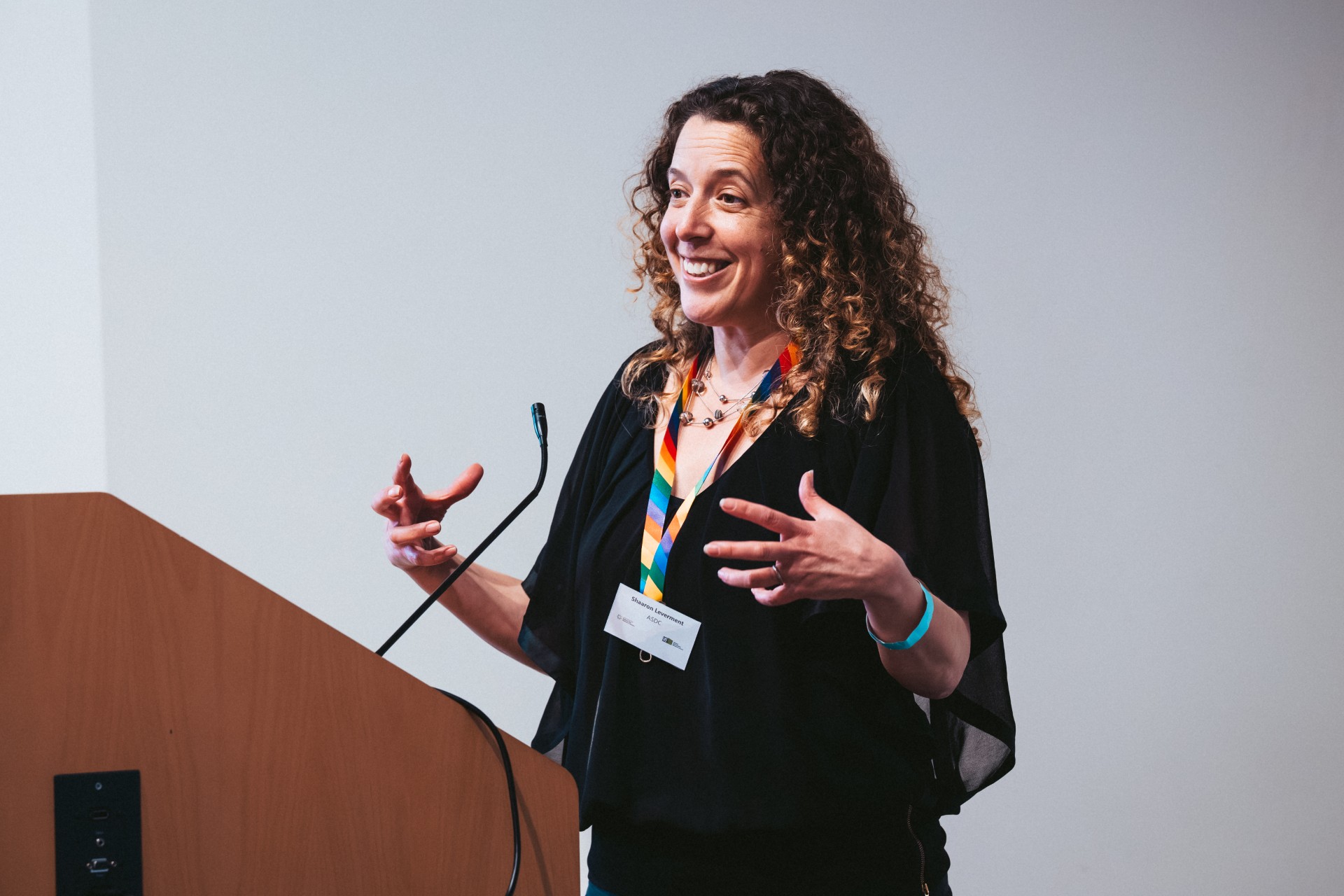
As Chief Executive of the Association for Science and Discovery Centres, a network of over 60 public-facing STEM engagement organisations, I’ve had the pleasure of working with Claire Davies, whose proactive and thoughtful approach has made a real impact. She first supported us by advising on inclusive and gender-sensitive language across key impact and evaluation assets, input that was both timely and invaluable. More recently, she has empowered our network through providing high-quality engagement resources and by creating safe spaces that build confidence and reduce the fear of “getting it wrong”. Always willing to share expertise, Claire is a pleasure to work with, offering both strategic advice and thoughtful attention to detail in delivery. Her contributions have meaningfully strengthened a sector that reaches millions each year.
Read more from Shaaron Leverment
Shaaron Leverment
Chief Executive, Association for Science and Discovery Centres
.jpg)
Physics and Astronomy at Exeter has held Juno Champion status since 2018.
Physics and Astronomy at Exeter has held an Athena SWAN Silver Award since 2018.